Cumhuriyet Mh. Büşra Sk. No: 18/20 (Ozan Plaza) Süleymanpaşa/TEKİRDAĞ


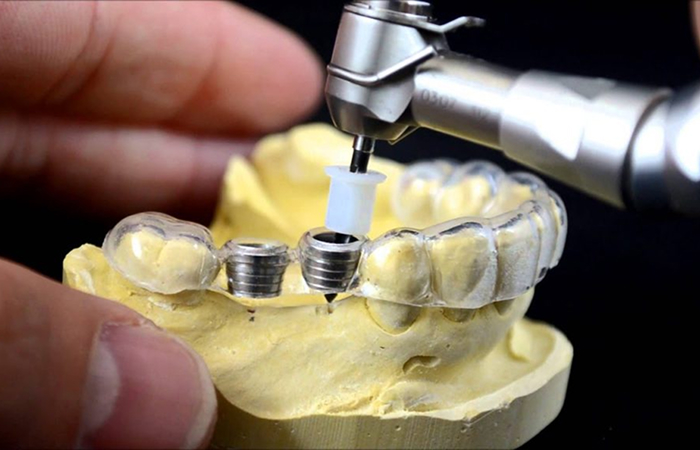
Flapless Implant Placement with Surgical Guide
Flapless implant placement using a surgical guide is a modern implant treatment method in which implants are placed without raising the gum tissue, using digital planning and guide-assisted surgical techniques. This technique aims to position the implant in the jawbone at the most accurate angle and depth while preserving the surrounding soft tissues. Due to less surgical trauma, the healing process is generally faster and more comfortable. The procedure is usually performed in a clinical setting under local anesthesia or sedation.
What is flapless implant placement with a surgical guide?
Flapless implant placement with a surgical guide is a procedure in which implants are placed without making an incision in the gum, using a surgical guide prepared based on previously obtained radiographic and digital measurements. The prepared surgical guide allows the implant to be positioned with high precision at the planned site. This method is especially aimed at minimizing tissue loss in aesthetic areas.
In which situations is flapless implant placement with a surgical guide applied?
It is applied in patients with sufficient bone volume, in cases of single or multiple missing teeth, and where rapid healing is desired. It is also preferred in situations where reducing surgical trauma is important, aesthetic expectations are high, and sensitive anatomical structures are present.
Things to consider before flapless implant placement with a surgical guide
The patient’s general health, existing systemic diseases, and regularly used medications should be thoroughly evaluated. Radiographic and tomographic imaging should be performed for digital planning, and the surgical guide should be designed based on these data. Maintaining oral hygiene, including brushing teeth and using an antiseptic mouthwash, helps reduce the risk of infection.
Things to consider after flapless implant placement with a surgical guide
After the procedure, minimal swelling and pain are usually observed. Medications prescribed by the dentist should be taken regularly, and hard or hot foods should be avoided during the first days. Smoking and alcohol consumption are not recommended, as they can negatively affect the healing process. Oral hygiene should be maintained, and scheduled follow-up appointments should not be missed.